A Medium in Motion
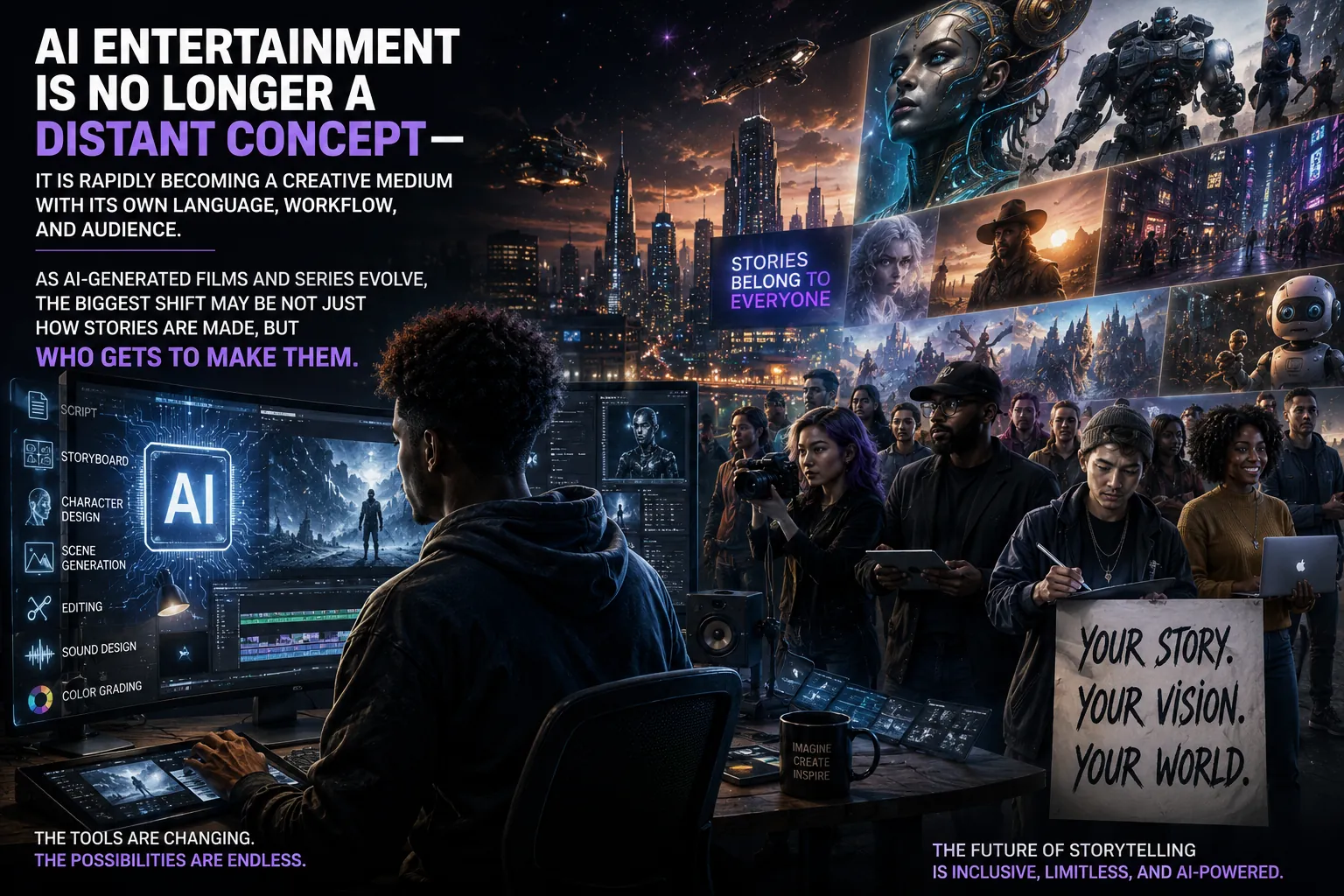
AI entertainment is moving from curiosity to category. What began as a wave of experimental clips, surreal visuals, and proof-of-concept shorts is now becoming a recognizable form of screen storytelling. For creators, it opens the door to faster iteration, smaller teams, and new visual possibilities. For audiences, it introduces a style of entertainment that feels both cinematic and computational—shaped by prompts, models, editing systems, and human intent.
In the world of movie spotlights, this matters because AI is not simply adding another production tool to the pipeline. It is changing the grammar of filmmaking itself. Storyboards can become scenes in hours. Visual worlds can be tested before a set is built—or without one being built at all. Characters, environments, and even performance styles can be developed through an ongoing dialogue between creator and machine.
What Makes AI Entertainment Different?
Traditional filmmaking is often defined by scale: crews, schedules, equipment, locations, and budgets. AI entertainment shifts part of that scale into software. That does not eliminate the need for craft—far from it—but it redistributes creative power. A filmmaker with a strong concept and a precise eye can now build ambitious imagery with fewer logistical barriers.
- Development becomes more iterative, with ideas visualized earlier in the process.
- Production can be compressed, allowing creators to move from concept to screen far more quickly.
- Style becomes highly fluid, blending realism, animation, fantasy, and abstraction inside one project.
- Access expands, giving independent artists and small teams a path to cinematic storytelling.
The result is not just cheaper content or faster content. At its best, AI entertainment creates a new creative space where experimentation is practical, not just aspirational.
From Tool to Storytelling Partner
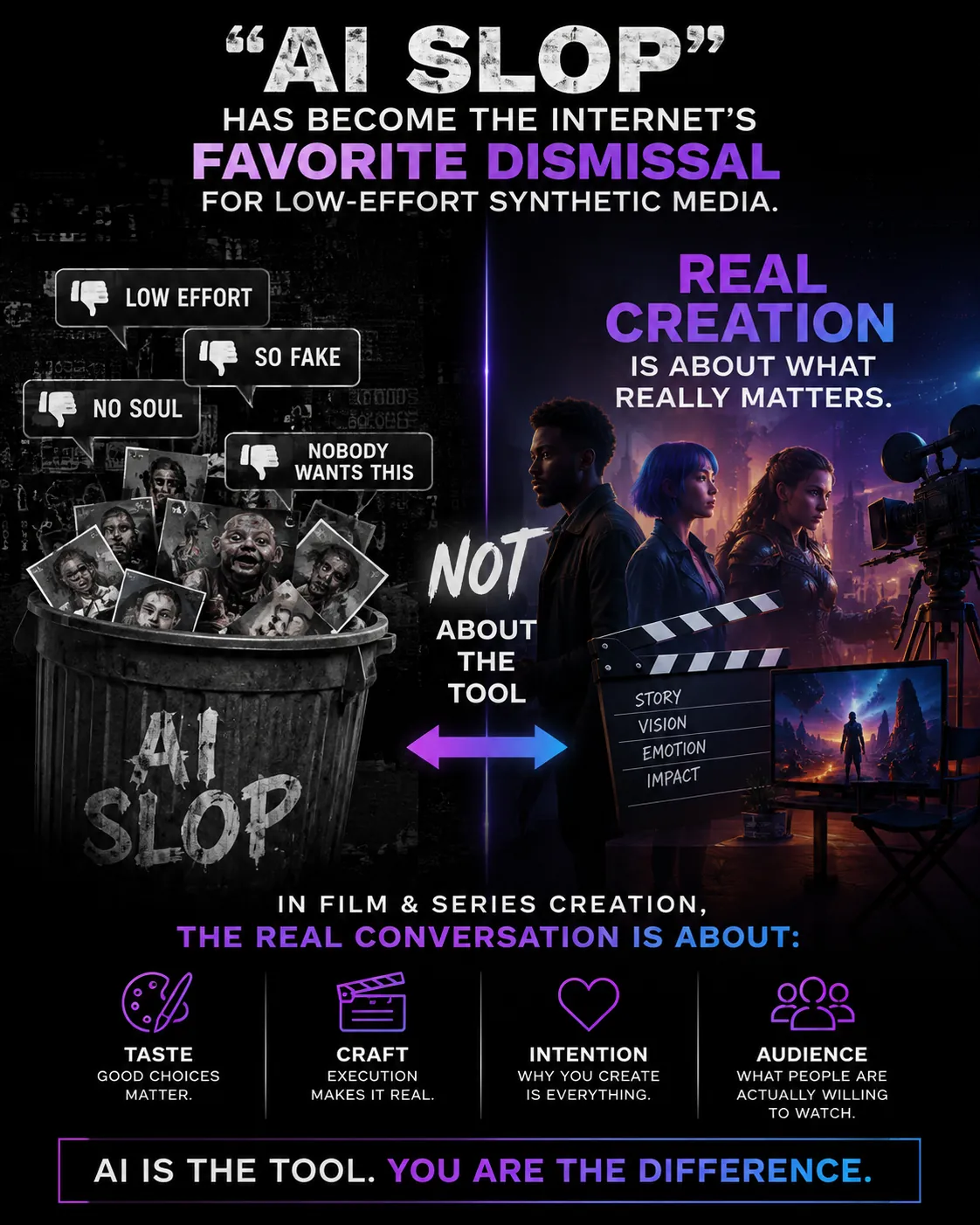
The most compelling AI-generated movies and series are not defined by automation alone. They are defined by direction. The strongest works use AI as a collaborator in image generation, editing, worldbuilding, and tone development—while keeping human storytelling at the center. This balance matters. Audiences may be drawn in by the novelty of the medium, but they stay for emotion, structure, character, and surprise.
That is why the conversation around AI entertainment is becoming more sophisticated. It is no longer only about whether a machine can create an image or imitate a style. It is about whether creators can shape these systems into meaningful works of cinema. The answer is increasingly yes—when strong artistic choices guide the process.
AI does not replace vision. It amplifies the ability to test, refine, and realize it.
A New Generation of Creators
One of the most exciting aspects of AI entertainment is who it empowers. Emerging filmmakers, digital artists, writers, animators, and hybrid creators now have access to tools that can dramatically increase what they can produce. This does not erase the value of traditional craft; instead, it creates a parallel path where new voices can enter the field without waiting for conventional gatekeepers.
That shift could have major cultural impact. More creators means more perspectives. More perspectives mean stranger, bolder, and more globally diverse stories. In that sense, AI entertainment is not just a technological trend. It is a distribution of authorship.
The Aesthetic Is Still Evolving
AI-generated cinema is still discovering its most powerful forms. Some projects lean into dream logic and uncanny imagery. Others aim for polished realism. Some combine live action, synthetic footage, and animation into a seamless hybrid. Because the medium is still developing, its visual identity remains open—and that openness is part of its appeal.
For audiences, this means watching a new cinematic language take shape in real time. For creators, it means there are few fixed rules. The field rewards experimentation, sharp curation, and the willingness to build workflows that did not exist a few years ago.
Why It Matters Now
AI entertainment matters now because it is reaching the point where novelty alone is no longer enough. The next phase will be defined by taste, discipline, storytelling ambition, and platform ecosystems that help great work stand out. As more films and series are made with AI at the core of production, the conversation shifts from possibility to quality.
That is where platforms like GEN.TV enter the picture. The future of AI-generated entertainment will not be shaped only by tools, but by the communities and stages that help creators publish, refine, and reach audiences. The spotlight is turning toward the works that prove AI cinema can be emotionally resonant, visually distinctive, and culturally relevant.
The Takeaway
AI entertainment is not a side branch of filmmaking anymore. It is becoming a serious creative arena—one that blends cinema, software, design, and storytelling into something new. The most important question is no longer whether AI can make movies. It is what kinds of movies this medium will inspire next.
For creators and viewers alike, that makes this moment worth watching closely.